Follow us!
Follow us!
From 8 to 10 April 2026, HY4RES partners gathered in Portugal for a three-day meeting hosted by the Instituto Superior Técnico (IST) in Lisbon. Despite the severe storms that hit Portugal in early 2026, the local team successfully installed the hybrid renewable energy system at the Community energy pilot site located in Moinho da Senhora do Salto, in the surroundings of Porto. This fifth on-site meeting was the opportunity to visit the new facility and exchange with the local stakeholders during a workshop organised in Águas do Douro e Paiva water treatment facility in Lever.
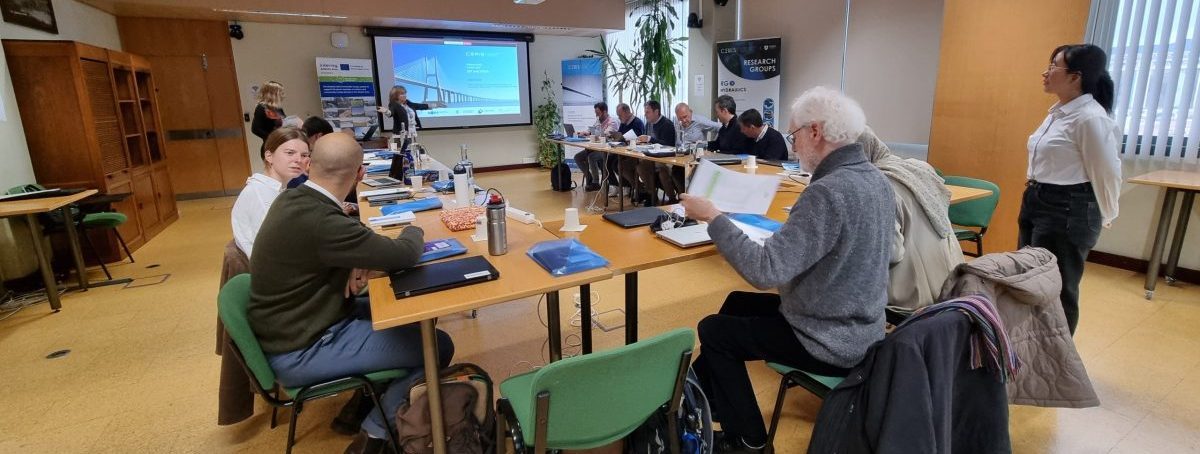
Welcomed on IST’s premises on the first day, each partner presented the progress achieved across the different project work packages.
Didia Covas, Vice-President of the Civil Engineering Research and Innovation for Sustainability (CERIS) research unit, introduced the day and highlighted IST’s long-standing expertise in hydraulic, environmental and water resources engineering.
As the project enters in its final year, all pilots have been successfully installed. These four pilot sites reflect the diversity of contexts in which hybrid systems can be deployed:
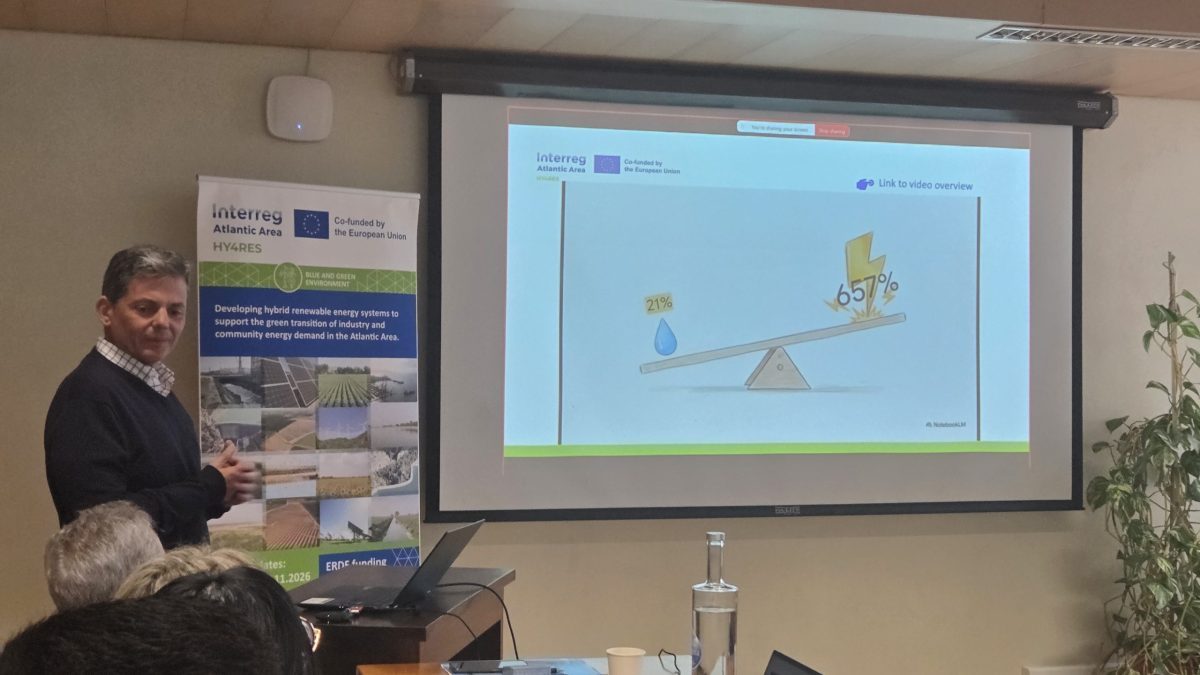
Over the past months, HY4RES made significant progress in the development of intelligent renewable energy management software. A decision-support platform is designed to optimise renewable energy systems through forecasting and scenario analysis, and integrates:
The platform is based on historical datasets, with future integration planned for real-time data from the irrigation pilot site. The final operational version will primarily support irrigation system operators in Las Catalinas farm, while also enabling comparative analysis across all HY4RES pilot sites.
Multi-objective optimisation strategies were also presented, aiming to maximise renewable energy use while minimising conventional energy costs under varying water demand conditions. This optimisation supports more adaptive and efficient operation strategies for hybrid systems in real-world contexts.
The four HY4RES pilot sites are screened to assess their sustainability using a systemic approach, integrating environmental, social and economic dimensions. This study includes the assessment of the dependencies to the ecosystem services, such as the availability of natural resources (water, land, rare earth elements…).
In addition, the project addresses the environmental impacts of hydropower systems, with a focus on fish‑passage modelling. Using eel as the reference species for laboratory tests, the work aims to optimise the design of centrifugal screw pump‑as‑turbine units to prevent fish injury and improve the compatibility of turbine operations with river ecosystems.
The second day of the meeting focused on field activities and stakeholder dialogue, with a morning visit to the Senhora do Salto Community energy pilot site and an afternoon workshop at the Águas do Douro e Paiva water treatment plant.
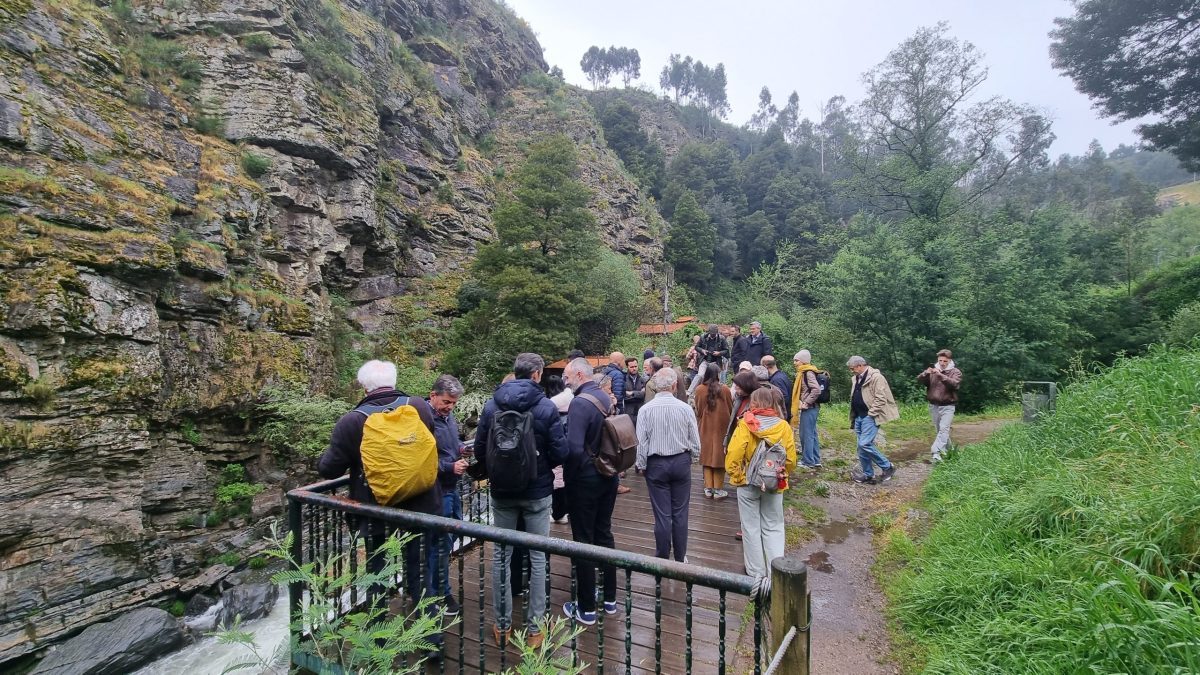
At the Moinho da Senhora do Salto pilot site, a historic mill located along the Sousa River in northern Portugal, the participants explored the hybrid renewable energy system integrated into a rehabilitated hydraulic structure: a combination of cultural heritage and renewable energy innovation. Set within a natural gorge characterised by steep cliffs and strong water flows, the site provides favourable conditions for testing hybrid renewable energy systems.
Participants walked along the historic weir and levada, key elements of the site’s hydraulic heritage that now directly support energy production. This pilot integrates three renewable energy sources:
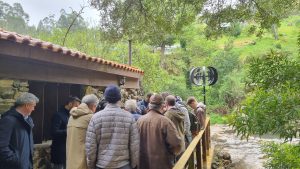
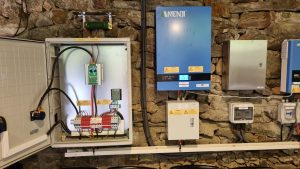
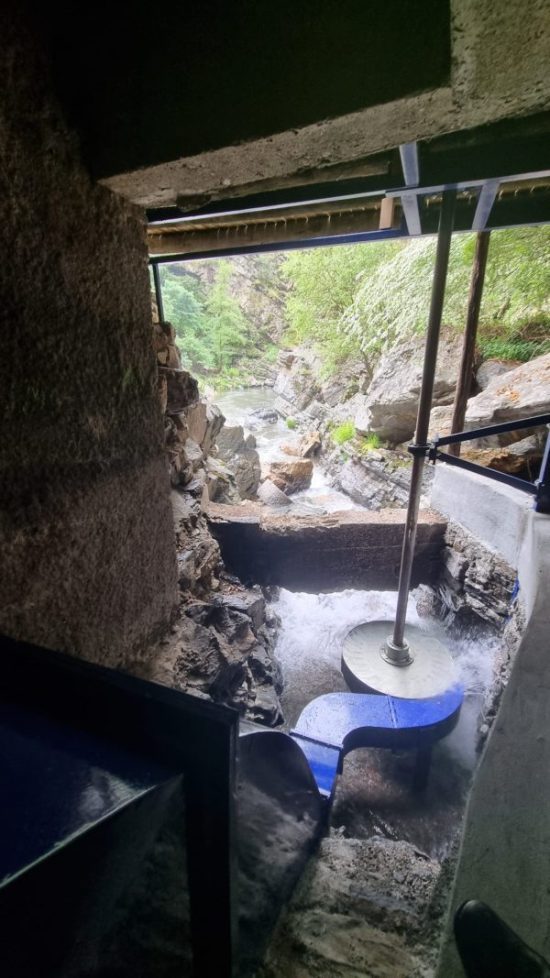
All components are interconnected through a hybrid control board, inverter and battery storage system, forming a fully functional micro-grid. This system automatically optimises energy flows, stores excess production, and delivers stable electricity to the mill and surrounding facilities. Beyond the technical setup, the pilot demonstrates how modern energy systems can be integrated into existing heritage infrastructure, preserving historical identity while enabling new functions.
In the afternoon, participants gathered at Águas de Douro e Paiva water treatment plant, which supplies 22 municipalities in the Porto region. Vitor Pereira, Regional Water Supply Manager, presented the organisation’s activities and highlighted its strong performance in water management, as well as ongoing efforts in energy efficiency, renewable energy deployment, and circular economy approaches, including sludge reuse.
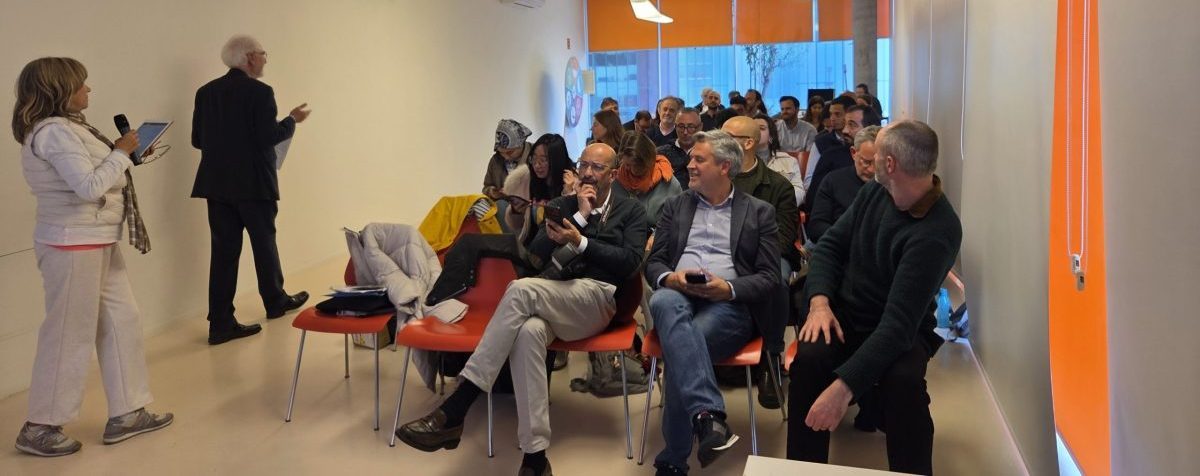
Francisco Piqueiro (University of Porto) expanded the discussion by highlighting rivers as both energy resources and cultural assets. With nearly two thousand mills across northern Portugal, these structures represent significant potential for decentralised renewable energy production. Tiago Reis Oliveria presented a concrete example of mill rehabilitation, transforming a historic structure into a sustainable tourism project integrating renewable energy while preserving cultural heritage.
HY4RES partners then presented the project’s approach across its four pilot areas: agriculture, aquaculture, ports, and energy communities. The Portuguese pilot was highlighted as a small-scale, non-conventional system combining multiple renewable sources within an existing structure, demonstrating how hybrid solutions can be adapted to local conditions.
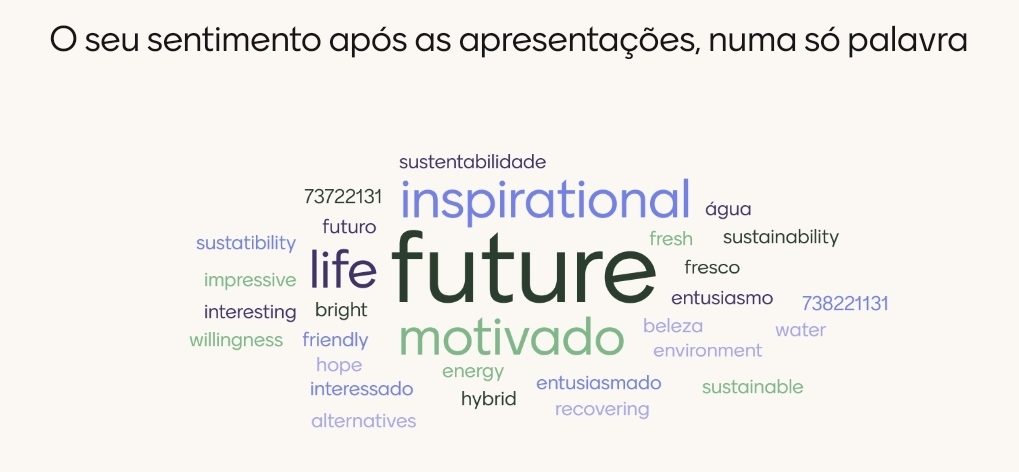
A stakeholder workshop followed, using an interactive format to explore pathways toward greater energy self-sufficiency in communities. Key insights included strong interest in decentralised energy systems, and recognition of the importance of intelligent energy management as a central enabling factor. Participants also raised concerns regarding economic viability, particularly investment costs and payback periods, alongside the need for policy support and regulatory incentives. Community engagement, education, and awareness were also identified as essential elements for successful deployment. Most participants estimated a time frame of 5 to 10 years for large-scale deployment of such systems, reflecting both optimism and the challenges ahead.
By combining a real-life pilot visit with interactive discussions, the day provided a comprehensive perspective on how hybrid renewable energy systems can be implemented, experienced, and further developed in collaboration with local stakeholders.
The final day concluded the partner meeting with a shared commitment to building on the obtained results and ensuring that the knowledge and experience developed within HY4RES can inform future initiatives and support the wider deployment of hybrid renewable energy systems, reinforcing their role in enabling sustainable energy transitions across Europe.
Sign up to our newsletter!