Follow us!
Follow us!
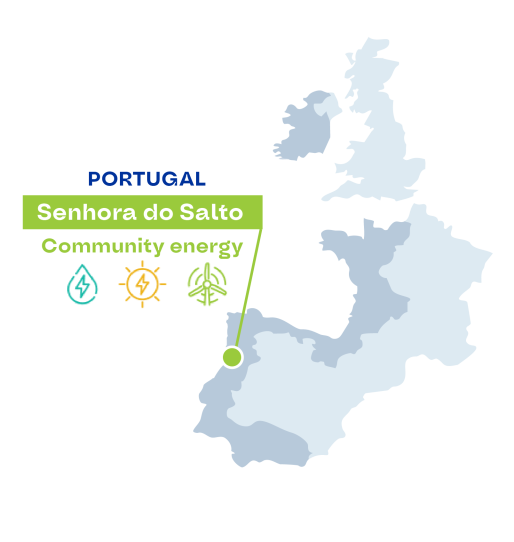
The pilot site at Senhora do Salto in Portugal concerns energy communities. The aim is to install a hybrid renewable energy system and implement a software to manage the community’s energy needs. The system uses water from the small stream, solar energy captured on the surrounding slopes, and wind energy. Thanks to HY4RES project, the objective is to enable the supply of the needed energy from renewable sources to meet the needs of the local community.
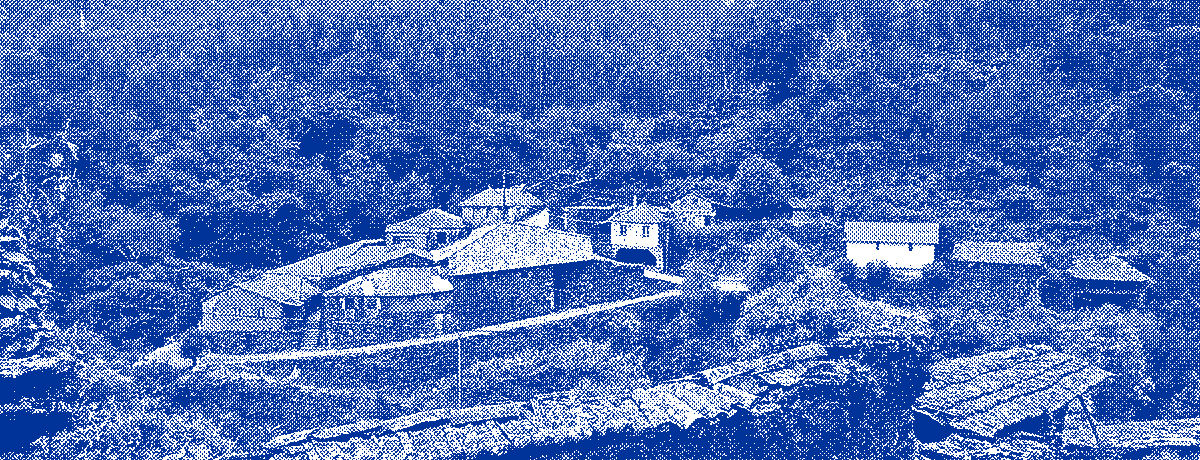
Moinho da Senhora do Salto, in Paredes, is located in a narrow gorge shaped by the Sousa River.
The site includes a historic water mill, a levada, and a weir, which are part of the local heritage. The area is visited by residents, schools, and tourists and has environmental and cultural value.
The HY4RES project is using this site to install a small-scale hybrid renewable energy system combining hydropower, solar PV, wind power and battery storage, demonstrating how multiple renewable sources can be integrated in a rural setting while respecting the natural and cultural heritage of the site.

1 localisation
The hybrid renewable energy system will be implemented in Senhora do Salto

12 months
The system’s performance will be monitored over a period of 12 months

3 kW
3 kW of hydropower expected at Senhora do Salto
1.5-2 kWp
1.5-2 kWp (peak power capacity) of solar PV
1 kW
1 kW of wind power production
The development of hybrid renewable energy systems faces a number of challenges in the energy community sector.
First and foremost, public policies and energy regulations need to be taken into account in energy community projects. The complexity and lenght of the licensing processes can be an obstacle to their development.
From an economic perspective, the small number of energy community models operating with a hybrid renewable energy system is a challenge.The building costs are higher for renewable energy infrastructures compared to conventional sources of energy such as fossil fuel. Through testing, it is essential to demonstrate the sustainability and effectiveness of the solutions developed within HY4RES, to ensure its support. It is also important to share concrete associated benefits of hybrid systems with communities.
From a technical point of view, efficiently integrating various renewable energy sources such as solar, wind, and hydroelectric into a community network can be complex. Developing affordable and effective energy storage technologies to ensure a stable energy supply is an important aspect of HY4RES project.
While community energy is generally more sustainable than conventional energy sources, there may still be local environmental impacts to consider, such as the need for space for wind or hydroelectric infrastructure. Adapting community energy strategies to address the challenges of climate change, such as extreme weather events, is crucial for ensuring long-term resilience.
Addressing these challenges will require a holistic and collaborative approach involving local and national authorities, communities, businesses, and academic institutions.
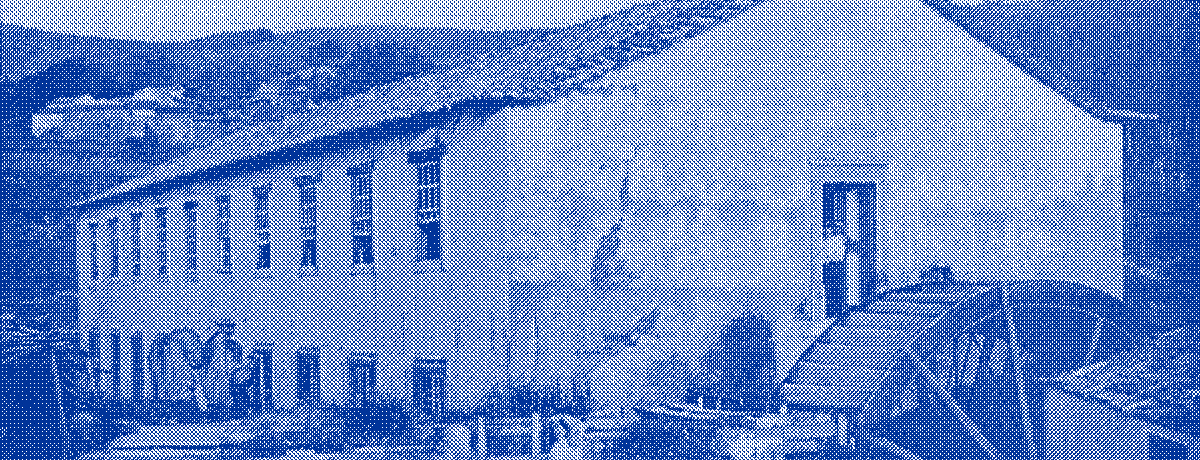
The solar PV and wind installations will use market-available technologies. The electrical installation will be based on PV solar technology, comprising a controller/rectifier and a dump load in the case of wind and hydro energy, solar inverter, protection panel, and monitoring and control system.
The project will implement an optimized solution for each site and monitor the system’s performance over a period of 12 months. Data on production and consumption will be transmitted to the intelligent management software for future optimization of hybrid systems.
The technical solution for the hydroelectric system involves installing an innovative water wheel developed as part of this project. The cross-flow type wheel, optimized for low and ultra-low drops, will have advantages such as simplicity, low manufacturing, installation, and maintenance costs, clog resistance, and high turbine flow resulting in lower cost per installed kWh and higher production compared to other available technologies.


Castanheira de Pera municipality
Community organisations, local government, policy makers in the local government, energy and environment sectors
Sign up to our newsletter!